
Stop Guessing Your Nutrition and Start Fueling With Real Biomarkers
Build a Nutrition Plan Around Your Real Biomarkers
Biomarker based nutrition plans start with measured data, not diet trends. To build one, establish a baseline with relevant blood markers, body-composition measures, training demands, diet history, and, when appropriate, glucose-response or microbiome data. Then use those findings to set food, macronutrient, and recovery priorities. Recheck key markers after 8 to 12 weeks and adjust based on what actually changes.
For an athlete, the most useful starting points often include:
Glycemic control: fasting glucose, HbA1c, and post-meal glucose response.
Cardiometabolic health: triglycerides, LDL cholesterol, HDL cholesterol, blood pressure, and waist measurement.
Recovery and inflammation: hs-CRP, iron status, vitamin D when clinically appropriate, and training load.
Individual context: food preferences, sleep, stress, injuries, allergies, goals, and adherence.
Generic guidelines remain a strong foundation. But they cannot tell you whether your triglycerides rise after certain meals, whether your glucose control needs attention, or whether a nutrient shortfall is limiting recovery. Research on personalized nutrition suggests that plans using multiple data sources can improve diet quality and may produce better triglyceride, HbA1c, weight, and waist outcomes than standard advice - especially when people follow the plan consistently.
At Longevity Athlete, the Signature Plan is a self-guided group program. Gold and Platinum Plans create individualized lifestyle protocols, using the right level of data to turn health and performance goals into practical daily decisions.

The Core Biological Markers That Drive Precision Fueling

When we strip away marketing fads, nutrition comes down to cellular metabolism. Our bodies do not process fuel in identical ways; individual biology dictates how efficiently we clear circulating fats, store glycogen, buffer oxidative stress, and resolve micro-inflammation from intense physical training. To design an optimal dietary protocol, we must look at both static genetic traits and dynamic physiological markers.
At the center of dynamic testing is the concept of phenotypic flexibility—your body’s ability to handle transient physiological stressors and return to baseline homeostasis. A mixed-meal tolerance challenge, for instance, stresses your metabolic machinery by supplying carbohydrates and fats simultaneously, allowing us to map postprandial glucose, insulin, and lipid clearance curves. Athletes with reduced phenotypic flexibility struggle to clear metabolic byproducts swiftly, which can compromise systemic recovery and tissue adaptation (de et al., 2021).
To gain a complete view of metabolic status, comprehensive panels analyze multiple biological layers:
Fasting Insulin & Glycemic Metrics: Pinpoint baseline insulin sensitivity and glucose regulation before overt dysglycemia develops.
Lipid Subfractions: Evaluate cardiovascular and metabolic lipid transit by looking beyond basic total cholesterol to postprandial triglycerides, Apolipoprotein B (ApoB), and LDL particle distribution.
Systemic Inflammation: Quantify systemic recovery and vascular stress through high-sensitivity C-reactive protein (hs-CRP) and erythrocyte sedimentation rate.
Gut Microbiome Beta-Diversity: Profile the composition, ecological richness, and relative taxa abundance of your gut ecosystem, which influences nutrient breakdown, short-chain fatty acid synthesis, and metabolic signaling (Bermingham et al., 2024).
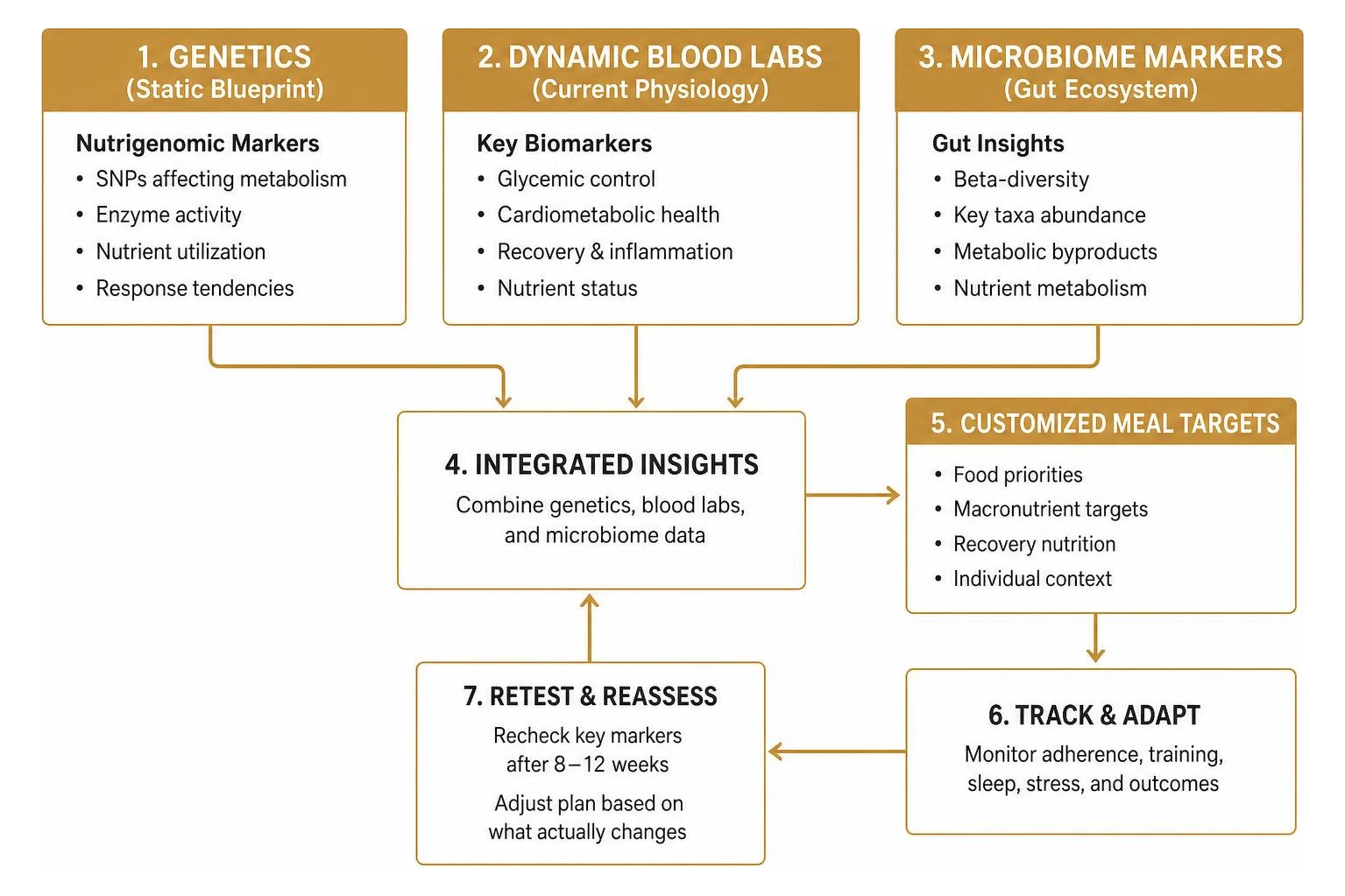
Genetics and Nutrigenomics in Action
While dynamic blood labs fluctuate with diet and training load, your genome provides the blueprint of your metabolic tendencies. Variants across single-nucleotide polymorphisms (SNPs) alter enzyme kinetics, transport mechanisms, and receptor affinities:
FTO (Fat Mass and Obesity-Associated Gene): Common risk variants (such as rs9939609, rs1121980, and rs1421085) correlate with altered satiety signaling and higher adiposity risk on high-saturated-fat diets. Following Mediterranean or DASH-style dietary patterns rich in whole grains and fiber significantly mitigates this predisposition.
MTHFR (Methylenetetrahydrofolate Reductase): Individuals carrying the homozygous TT mutation at the C677T locus experience reduced enzymatic conversion of folate to its active form, 5-methyltetrahydrofolate (5-MTHF). This can impair methylation and elevate cardiovascular risk via homocysteine accumulation, requiring tailored active folate intake beyond standard dietary allowances.
APOA1 Polymorphism (G > A): Carriers of the A allele experience marked elevations in beneficial HDL cholesterol when consuming long-chain omega-3 polyunsaturated fatty acids (PUFAs), a positive response not observed in those with the standard GG genotype.
CAB39 (Calcium Binding Protein 39): The minor A allele of the rs6722579 variant increases susceptibility to abdominal fat accumulation when total dietary fat consumption exceeds standard Dietary Reference Intakes (DRIs).
CPQ (Carboxypeptidase Q): Carriers of the minor T allele at rs59465035 show reduced risk of visceral adiposity when supported by higher baseline vitamin C consumption.
Dynamic Metabolic, Glycemic, and Inflammatory Markers
Static genetic analysis tells us what might happen; dynamic biomarkers show what is actually happening inside your tissues right now. Monitoring day-to-day metabolic shifts prevents overtraining and systemic dysregulation:
Postprandial Triglycerides: Extended elevation of blood lipids after eating signals impaired lipid clearance, metabolic inflexibility, and heightened cardiometabolic strain.
HbA1c and Continuous Glucose Monitoring (CGM): Evaluating average red blood cell glycation alongside real-time glycemic excursions provides direct insight into glucose stability during recovery periods.
Homocysteine & Uric Acid: Elevated homocysteine signals suboptimal methylation dynamics or B-vitamin deficiencies, while elevated serum uric acid reflects excessive purine turnover, fructose overload, or impaired renal clearance.
High-Sensitivity C-Reactive Protein (hs-CRP): Serves as an acute-phase inflammatory biomarker, distinguishing healthy exercise adaptation from chronic systemic inflammation.
Biological Marker | Population Reference Standard | Biomarker-Targeted Optimal Threshold | Primary Dietary Action Trigger |
|---|---|---|---|
Fasting Insulin | < 25 µIU/mL | < 5.0 µIU/mL | Reduce refined carbohydrates; elevate fiber and functional fats |
Postprandial Triglycerides | < 200 mg/dL (after meals) | < 130 mg/dL (postprandial peak) | Restrict saturated fat; increase marine omega-3 PUFAs |
Homocysteine | < 15 µmol/L | 6.0 – 8.5 µmol/L | Provide methylated folate (L-5-MTHF) and methylcobalamin |
hs-CRP | < 3.0 mg/L | < 0.8 mg/L | Anti-inflammatory polyphenols; balance training load and recovery |
HbA1c | < 5.7% | 4.8 – 5.2% | Optimize meal timing, carbohydrate distribution, and post-meal movement |
Why Biomarker Based Nutrition Plans Outperform Generic Diets
Generic public health dietary recommendations serve an important baseline purpose for general populations, but they are designed to prevent basic nutrient deficiencies, not to maximize athletic performance or optimize longevity. In fact, studies show that less than 1% of the population adheres perfectly to core public guidelines, largely because rigid, population-wide advice fails to accommodate personal metabolic responses.
Personalized protocols improve nutritional outcomes by tailoring macronutrient splits, food sources, and meal timing to individual biochemistry. A comprehensive review of clinical trials confirms that targeting an individual's specific metabotype directly improves objective measures such as insulin sensitivity, blood lipid fractions, and glycemic stability compared to generic dietary recommendations. Explore the key evidence for personalised nutrition: a review of randomised controlled trials to see how multi-omics data integration improves clinical outcomes across diverse populations.
Clinical Evidence from Landmark Trials
Substantial evidence from modern precision health trials validates the efficacy of data-driven nutrition:
The PREDICT Studies: Examining thousands of postprandial glycemic and lipid responses revealed that identical twins consuming identical meals can exhibit radically different metabolic curves. Machine-learning models integrating gut microbiome metagenomics, fasting blood labs, and post-meal metrics successfully predicted individual glycemic and lipemic responses (Bermingham et al., 2024).
The 18-Week Personalized Nutrition RCT: In an 18-week randomized controlled trial evaluating adults on a personalized dietary program (PDP) versus standard USDA guidelines, participants using biomarker-driven food scoring achieved a significant triglyceride reduction of -0.13 mmol/L ($P = 0.016$), lost an average of 2.46 kg, reduced waist circumference by 2.35 cm, and improved their Healthy Eating Index score by +7.08 points (Bermingham et al., 2024). The intervention also promoted beneficial shifts in gut microbiome beta-diversity (Bermingham et al., 2024). Read the complete randomized controlled trial on the effects of a personalized nutrition program on cardiometabolic health for deeper methodology and microbiome analysis.
The Habit & NOW Trials: The Habit study demonstrated that individuals with lower baseline phenotypic flexibility who adhered to systems-based nutrition saw their LDL cholesterol drop significantly by -0.44 mmol/L ($P = 0.002$) (de et al., 2021). Similarly, the Nutrigenomics, Overweight/Obesity and Weight Management (NOW) trial found that nutrigenetic-guided interventions led to greater reductions in body fat percentage than standard interventions.
The Food4Me European Study: Showed that individuals receiving biomarker- and gene-informed dietary coaching demonstrated superior dietary compliance, healthier eating habits, and better metabolic marker control than those given conventional guidance.
Designing Effective Biomarker Based Nutrition Plans for Athletes
For competitive and disciplined athletes, precision nutrition balances training stress with physiological recovery. High training volume magnifies the impact of small metabolic inefficiencies.
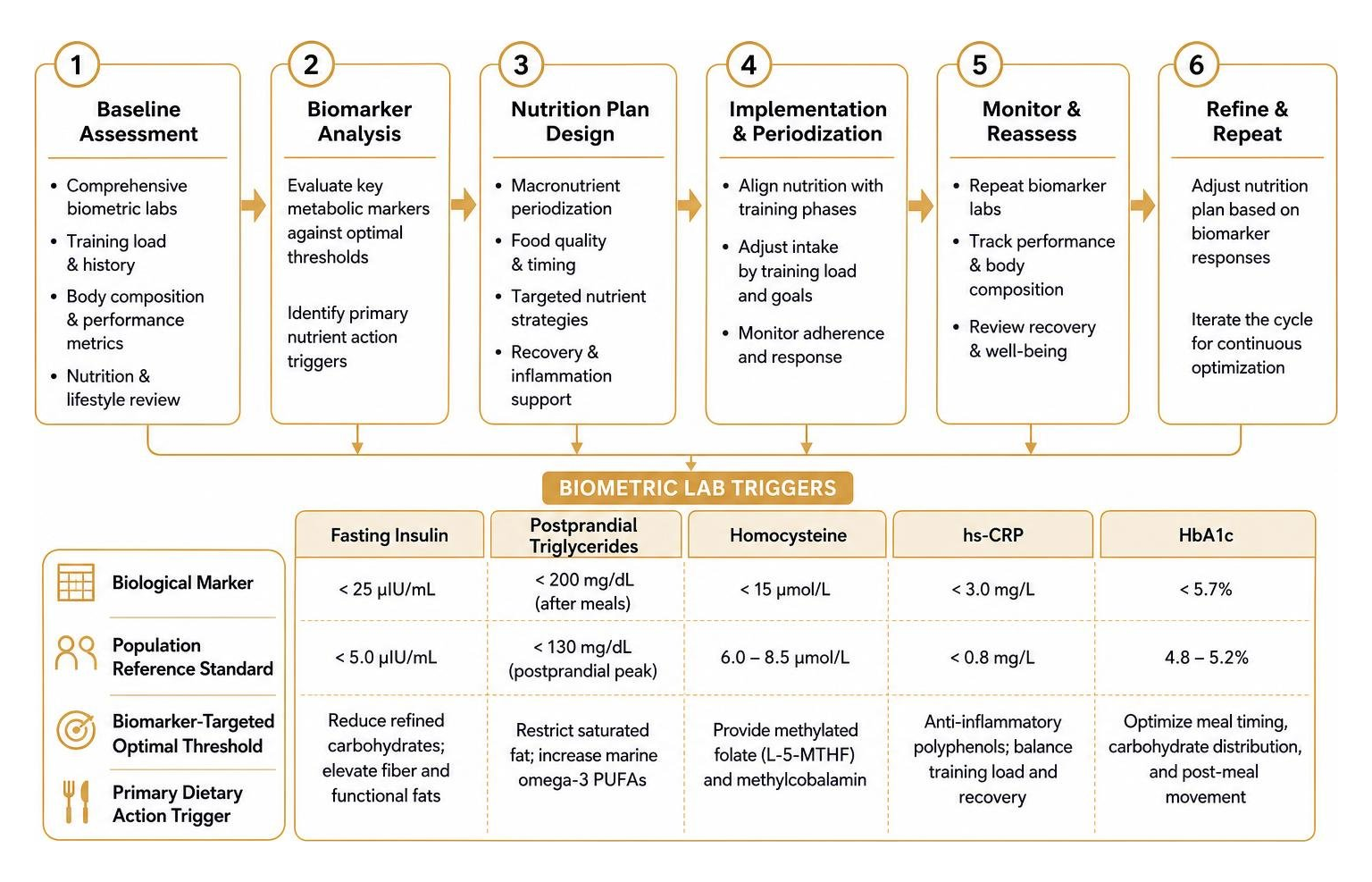
Using comprehensive diagnostics, we adjust nutritional protocols to the athlete's actual biological data:
Macronutrient Periodization: Athletes with higher baseline insulin sensitivity and elevated training loads can handle and clear higher carbohydrate volumes for glycogen replenishment, whereas those with fluctuating postprandial glucose benefit from lower-glycemic carbohydrate sources paired with healthy fats.
Substrate Utilization: Blood lipid responses indicate whether an athlete efficiently utilizes fats during low-intensity training or experiences extended postprandial lipemia that might impair cellular recovery.
Recovery Optimization: Tracking inflammatory markers like hs-CRP and serum ferritin ensures we can identify under-recovery before it manifests as clinical overtraining syndrome.
Our performance-focused services integrate these diagnostic markers into clear, actionable protocols tailored for daily performance demands.
Step-by-Step Guide: Translating Biomarker Data into a Daily Protocol

Building a personalized nutritional program is an iterative, data-driven process. Here is how we turn lab values into an actionable daily fueling plan:
Step 1: Establish Your Multi-Omic Baseline
Gather comprehensive diagnostic data before altering your diet:
Complete blood chemistry (fasting insulin, glucose, advanced lipid panel, hs-CRP, homocysteine, hepatic and renal markers).
Genetic panel screening for metabolic SNPs (including FTO, MTHFR, APOA1, CAB39, and CPQ).
Comprehensive stool microbiome analysis to assess microbial diversity and functional metabolite potential.
Baseline 7-day nutritional and training log.
Step 2: Stratify Your Metabotype
Group your physiological data into primary operational targets:
Glycemic Phenotype: High vs. low glycemic variability and post-meal glucose recovery.
Lipid Clearance Phenotype: Rapid vs. delayed triglyceride clearance and saturated fat sensitivity.
Inflammatory & Methylation Status: Elevated vs. baseline hs-CRP and homocysteine levels.
Step 3: Construct Your Algorithmic Daily Plate
Translate these phenotypic findings into practical meals:
Match carbohydrate quantity, timing, and glycemic index to your measured insulin dynamics and daily training expenditures.
Set dietary fat composition (PUFA vs. MUFA vs. saturated fat) based on your APOA1, CAB39, and lipid clearance profiles.
Introduce targeted micronutrient cofactors (such as L-5-MTHF for MTHFR variants or targeted polyphenol extracts for high hs-CRP).
Step 4: Track, Re-Test, and Refine
No plan is static. Re-test dynamic markers every 8 to 12 weeks to evaluate cellular response and adjust recommendations based on your real-world progress.
Key Clinical Considerations for Biomarker Based Nutrition Plans
Scaling precision nutrition requires attention to ethical, legal, and social implications (ELSI). Genetic and biological information must be handled with care:
Data Privacy and Security: Platforms must follow rigorous frameworks such as GDPR and HIPAA-compliant data architecture, ensuring user data is encrypted and securely stored.
Actionability Over Novelty: While millions of genetic variants exist, protocols should prioritize well-researched, clinically validated SNPs to prevent unnecessary dietary restrictions.
Health Equity & Professional Guidance: High-tier diagnostics should always be paired with qualified clinical interpretation from registered dietitians or performance nutritionists to avoid misinterpretation.
For athletes and high performers seeking comprehensive, end-to-end guidance, our Gold Membership delivers bespoke lifestyle and nutrition protocols built around detailed clinical diagnostics and systematic follow-up.
Integrating Real-Time AI and Wearable Tech
Modern precision nutrition combines periodic blood panels with real-time biometric streams. Machine learning algorithms can integrate data from continuous glucose monitors (CGMs), wearable recovery trackers, and digital food logging to generate predictive glycemic models.
These platforms evaluate how meal compositions interact with your previous night's sleep, resting heart rate variability (HRV), and training load. However, artificial intelligence has clear operational boundaries. Algorithms excel at pattern recognition, but they cannot replace clinical oversight or qualitative health context. AI serves as a powerful analytical tool to support, rather than dictate, an athlete's nutritional framework.
Frequently Asked Questions About Precision Nutrition
How often should nutritional biomarkers be retested?
Dynamic metabolic and inflammatory markers (such as fasting insulin, postprandial triglycerides, hs-CRP, and liver enzymes) should generally be reassessed every 8 to 12 weeks. This timeframe matches the average lifespan of human erythrocytes (which dictates HbA1c turnover) and provides adequate time for dietary interventions to alter cellular physiology. Genetic markers remain constant and only need to be tested once.
Can genetic testing alone determine an optimal athletic diet?
No. Genetic testing provides valuable baseline information about metabolic traits and nutrient conversion tendencies, but it is static. It cannot measure current inflammation, acute metabolic status, or daily training adaptations. Effective precision nutrition combines static nutrigenomics with dynamic blood chemistry, microbiome metrics, and lifestyle tracking.
What is the difference between generic guidelines and biomarker-informed fueling?
Generic guidelines provide broad, population-level recommendations designed to prevent nutritional deficiencies across diverse groups. Biomarker-informed fueling uses an individual's specific blood chemistry, genetic variants, and real-time metabolic responses to customize macronutrient ratios, micronutrient forms, and meal timing for performance and longevity goals.
Conclusion
Relying on generic dietary advice leaves your athletic potential and long-term vitality to chance. By measuring your unique biological markers—from genomic variants and lipid fractions to glycemic stability and inflammatory markers—you remove the guesswork from daily nutrition.
Precision performance is a continuous process of testing, executing, and refining. When you fuel your body according to its distinct biochemistry, you improve recovery, optimize body composition, and protect your health span.
Ready to upgrade your nutrition with data-driven protocols? Visit Longevity Athlete to discover how our precision performance wellness consulting can help you fuel with purpose.
Scientific References
Bermingham KM, Linenberg I, Polidori L, Asnicar F, Arrè A, Wolf J, Badri F, Bernard H, Capdevila J, Bulsiewicz WJ, Gardner CD, Ordovas JM, Davies R, Hadjigeorgiou G, Hall WL, Delahanty LM, Valdes AM, Segata N, Spector TD, Berry SE. "Effects of a personalized nutrition program on cardiometabolic health: a randomized controlled trial.." Nature medicine, 2024. PMCID PMC11271409. de Hoogh IM, Winters BL, Nieman KM, Bijlsma S, Krone T, van den Broek TJ, Anderson BD, Caspers MPM, Anthony JC, Wopereis S. "A Novel Personalized Systems Nutrition Program Improves Dietary Patterns, Lifestyle Behaviors and Health-Related Outcomes: Results from the Habit Study.." Nutrients, 2021. PMCID PMC8224682.